Live on Zoom · Six Tuesdays

Underwriting
Masters
with Claude.

Six weekly classes that walk through every part of an underwriting, in order. We meet on Zoom at 6:30pm Eastern, starting September 22. Sign up once and you are in for all six Tuesdays.

The formatSix classes
  • Live on Zoom, and you can ask questions in the room
  • Tuesdays at 6:30pm Eastern, six weeks
  • We start at the beginning and assume nothing
  • Sign up once and you are in for the whole series
0 of 15
Seats filled

15 seats left. After that, this series is full.

How it runs
Free
6 classes
Every part of an
underwriting, in order
6 weeks
Every Tuesday
at 6:30pm ET
Zoom
Link sent after
you register
15 seats
Then this series
is full

Sign up once and you are in from September 22 through October 27. We stop at 15 people. After that you wait for the next series.

The six Tuesdays

Starting September 22
at 6:30pm Eastern.

Same time each week, on Zoom. If you miss a class, the recording will be on the webinars page afterward.

  1. 01

    How a deal actually makes money

    Foundations

  2. 02

    Building a top line you can defend

    Revenue

  3. 03

    Where most deals are actually lost

    Expenses

  4. 04

    Debt, equity and the capital stack

    Capital

  5. 05

    CapEx and the value-add case

    Business plan

  6. 06

    Returns, risk, and defending your number

    The decision

We send the Zoom link after you register. Same room every week.

Your speaker

An expert on underwriting,
from deals that actually closed.

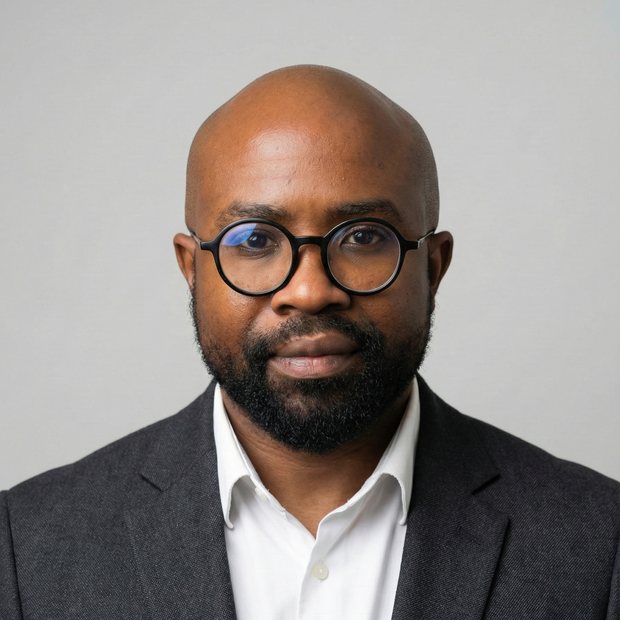
J. Claude Mouaffi
Founder, Chazak Investment

J. Claude Mouaffi

Claude has written a number of successful multifamily deals, and underwriting is the work he is known for. He still does it himself. Not a template handed down, and not a model someone else filled in. The rent roll, the T-12, the capital stack, and a number he can stand behind when a lender or an investor leans on it.

That expertise was built in two places. A decade in corporate finance, most of it in FP&A across infrastructure and mining, where the job was to look hard at a set of numbers and say plainly what they meant. Then his own acquisitions, starting in 2022, where he wrote the underwriting for deals the firm closed and still writes it for the ones in front of him.

He also spent four years coaching people through their own finances, which is why this series assumes nothing and still does not talk down to you. He built Chazak so other busy professionals would not have to work this out alone. He is a founding principal at Mila Penn Chazak, where he structures the capital side of each acquisition.

For six Tuesdays he takes that same order of work into a live room on Zoom. Every part of an underwriting, in order, with the questions you would ask if you were sitting next to him on a live file.

The problem

A model that balances
can still be completely wrong.

Most people learn underwriting from a template somebody handed them. The formulas tie out, the summary page looks professional, and not one assumption underneath it has ever been tested.

01 · Templates

Inheriting a model you cannot see into

A borrowed spreadsheet will happily produce a confident number from assumptions you never chose. If you cannot rebuild it, you cannot tell when it is lying to you.

02 · The OM

Offering memoranda are marketing

Broker packages are written to be believed, not checked. The pro forma is a sales argument. Almost nobody rebuilds it from the rent roll and the T-12, which is exactly where the deal is won or lost.

03 · Vocabulary

Knowing the terms is not judgment

Knowing what a debt yield is and knowing which constraint actually binds on your deal are different skills. Videos teach the first. The second only comes from working through real numbers with someone who will push back.

04 · The plateau

Semi-seasoned is its own trap

You can fill in a model quickly, sound fluent in a meeting, and still not be able to defend a single line when an investor or a lender leans on it. That gap does not close on its own.

The syllabus

Six classes. Every part
of an underwriting, in order.

Each class builds a section of the model and then tears it apart. You leave with the sheet you built, the reasoning behind every input, and a piece of homework against a real deal.

01Foundations

How a deal actually makes money

Before a single cell of a model. What underwriting is for, where returns genuinely come from, and the vocabulary that makes everything after this sound like plain English.

  • What underwriting is, and what it is not
  • The four sources of return: cash flow, amortisation, appreciation, tax
  • NOI and cap rate, and why a dollar of NOI is worth fifteen to twenty of value
  • Reading a rent roll for the first time
  • Reading a T-12 for the first time
  • GPR, loss to lease, vacancy, concessions, bad debt, EGI
  • OpEx, NOI, DSCR, cash-on-cash, IRR, equity multiple
  • Laying out the skeleton of your own model
  • Homework: pull a live OM and label every number in it
02Revenue

Building a top line you can defend

The rent roll is where a deal is either real or imagined. We build revenue from unit-level data upward and keep what is in place strictly separate from what is hoped for.

  • Rent roll forensics: unit mix, in-place versus market, lease expirations
  • Month-to-month exposure and why it changes your risk
  • Loss to lease and gain to lease
  • Choosing comps: vintage, quality, amenities, location
  • The comp adjustments nobody writes down
  • Proving market rent instead of asserting it
  • Other income: RUBS, pet, parking, laundry, fees, and what is really collectable
  • Physical versus economic occupancy
  • Vacancy, concessions, non-revenue units, bad debt
  • Walking GPR down to EGI, line by line
  • Homework: rebuild a broker's revenue page from the raw rent roll
03Expenses

Where most deals are actually lost

Revenue gets the attention, expenses do the damage. We normalise a real T-12 line by line and build the cost load a new owner will genuinely carry, not the one the seller enjoyed.

  • Normalising a T-12: one-offs, owner add-backs, partial years
  • Property taxes and reassessment on sale, the most common miss there is
  • Insurance, and what the last few years have done to it
  • Payroll, contract services, repairs and maintenance
  • Turn costs and where they hide
  • Utilities, and what RUBS does and does not recover
  • Marketing, administration, and the management fee
  • Replacement reserves, and what a lender will require
  • Per-unit and per-square-foot benchmarks by vintage and market
  • Why a flat two percent expense trend is a fiction
  • Homework: normalise a T-12 and defend every adjustment you made
04Capital

Debt, equity and the capital stack

The same property underwrites to wildly different returns depending on how it is paid for. We size debt properly, then build the equity structure that sits on top of it.

  • Agency, bank, bridge and debt fund, and when each is the right tool
  • Sizing on LTV, LTC, DSCR and debt yield
  • Working out which constraint actually binds
  • Fixed versus floating, interest-only periods
  • Rate caps, and what they cost now
  • Amortisation, prepayment, yield maintenance, defeasance, assumption
  • Sources and uses: everything that has to be funded at close
  • LP and GP economics: preferred return, splits, catch-up, promote
  • Acquisition, asset management and disposition fees
  • Modelling a waterfall without getting lost in it
  • Homework: size the debt three ways and find the binding constraint
05Business plan

CapEx and the value-add case

A value-add deal is a construction plan with a spreadsheet attached. We scope the work, price it from real numbers, prove the premium, and model how long it honestly takes.

  • Scoping the work: interior, exterior, amenity, deferred maintenance
  • Building a cost per unit from quotes, not rules of thumb
  • Proving the renovation premium with comps
  • Turn pace: how many units per month you can really deliver
  • Downtime, turn cost, and the drag on revenue while you work
  • Modelling the stabilisation curve month by month
  • Sequencing capital: what gets spent when
  • Contingency, and why five percent is rarely enough
  • What happens to the plan when the premium does not appear
  • Homework: build a renovation schedule and layer it into your model
06The decision

Returns, risk, and defending your number

The number at the bottom is the easy part. This class is about what that number hides, what has to stay true for it to hold, and how to defend it to somebody who disagrees with you.

  • Choosing an exit cap, and why you expand it
  • Hold period, and what changes when you are wrong about it
  • IRR, equity multiple, cash-on-cash and average annual return
  • What each of those metrics quietly hides
  • Levered versus unlevered, and what the gap tells you
  • Sensitivity tables: exit cap, rent growth, renovation premium, rate
  • Break-even occupancy and break-even rent
  • Stress testing: what has to go wrong before you lose money
  • Writing the investment memo
  • Presenting numbers you can stand behind
  • Homework: underwrite a live deal end to end and defend it to the room

Six Tuesdays. Sign up once and you are in for all of them.

Who it is for

New to underwriting,
or stuck halfway.

If you have never opened a T-12, start at Class 01 and nothing will be assumed of you. If you already build models but cannot always say why an input is what it is, this is the part that usually gets skipped.

  • Aspiring and new underwriters
  • Analysts who inherited a model and want to understand it
  • Operators moving from single-family into multifamily
  • Passive investors who want to check a sponsor's numbers themselves
  • Anyone who can fill in a template but cannot yet defend it

Questions first?

Infos@chazakinvestment.com +1 (347) 471-1540

Tell us where you are with underwriting today. We will tell you honestly whether this series is the right starting point.

Fifteen seats

Save a seat for
all six Tuesdays.

This is free, and we meet on Zoom. Sign up once and you get all six Tuesdays, starting September 22 at 6:30pm Eastern. We stop at 15 people.

  • Sign up once for every Tuesday from September 22 to October 27
  • We send the Zoom link after you register
  • We start at the beginning. Nothing is assumed.

Underwriting Masters with Claude is an educational programme. It teaches a method for analysing multifamily real estate and does not constitute investment, tax or legal advice, a recommendation to buy or sell any security, or an offer of any investment. Deals discussed in class are used as teaching material. Any figures shown are illustrative. You remain responsible for your own analysis and your own decisions. Classes are held on Zoom.